
2021-07-22
Workplace lighting focused on human comfort
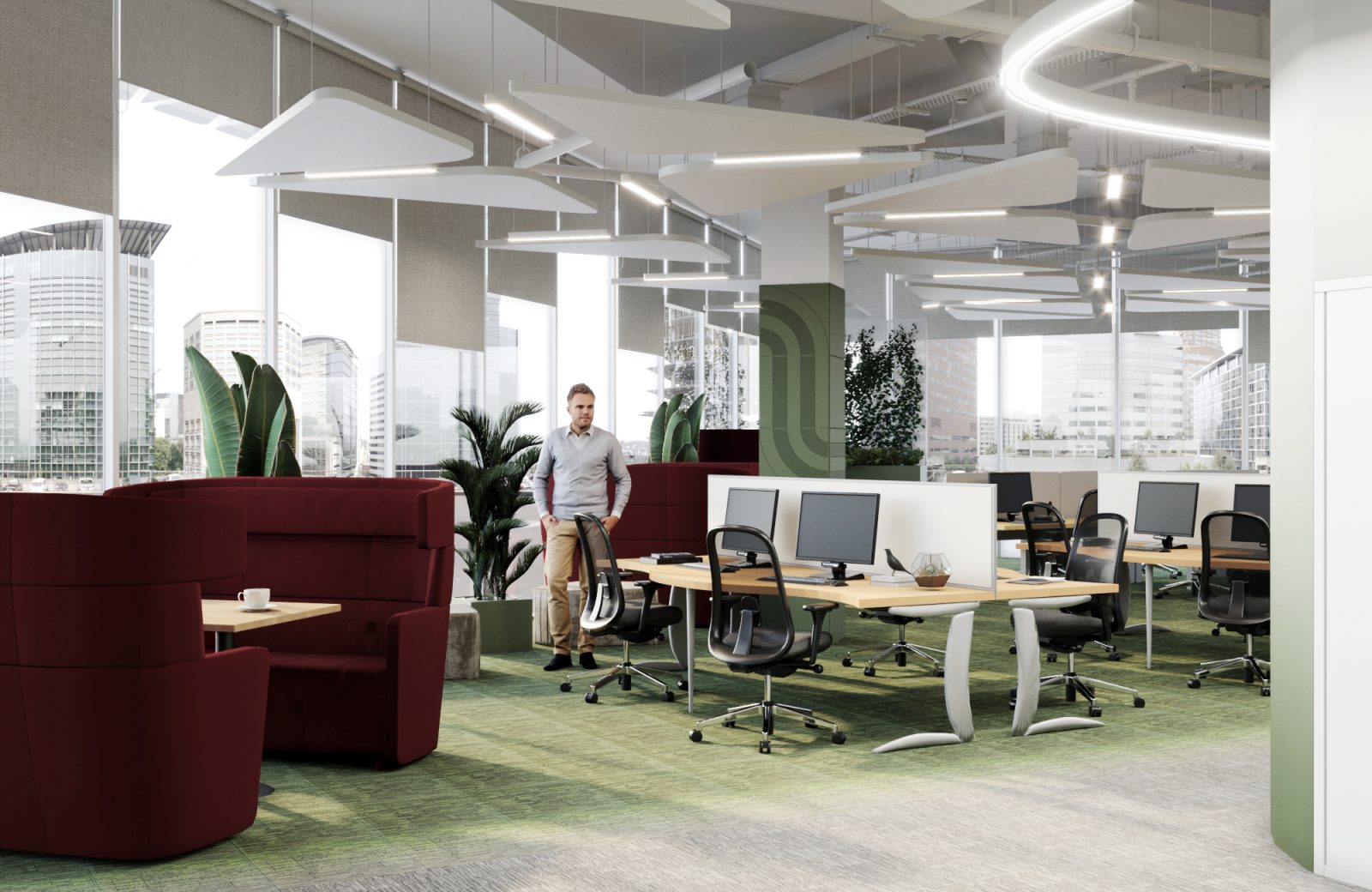
Such lighting can also reduce energy costs, as more natural light in an office means less artificial light is needed, which is another financial benefit.
There is no doubt that the quality of light we receive on a daily basis affects our personal and professional well-being. Plus, it is vital to our mental and emotional health. Poor lighting can cause persistent headaches, anxiety, visual impairment or dizziness, and it also affects our productivity and quality of tasks.
Natural and artificial lighting. Keeping balance
By nature, humans are active mammals. It doesn’t sound very grateful, but it is perceived as completely normal: the rhythm of light and darkness determines our daily routine. Many people cannot sleep in the light, wake up at sunrise, and get tired in the dark. This is fine. The body produces melatonin when the brightness decreases, the hormone has a relaxing effect and thus puts the body into a resting phase. The concentration is over, fatigue sets in. In this connection, natural light should prevail, and artificial light should simply increase the light to a sufficient level – the goal should be for people to feel connected with the outside world, while being able to work comfortably.
Such lighting can also reduce energy costs, as more natural light in an office means less artificial light is needed, which is another financial benefit.
Natural light would be ideal, as sunlight dynamically changes temperature and intensity throughout the day. He is responsible for controlling our biorhythms. Therefore, it is very important to adapt artificial lighting to every moment of the day.
With daylight management systems (also known as daylight harvesting systems), you can adjust the level of artificial light based on the level of natural light.
Of course, not all areas can or should have natural light. For example, areas with less traffic, such as conference rooms, meeting rooms, kitchens or washrooms, can be safely designed with artificial lighting.
Considering the benefits of exposure to natural light, make sure your employees have access to sunlight at their desks.
Lighting control systems
Lighting control systems are designed to save energy in an office building. Areas that are not in constant use, such as hallways, restrooms, and conference rooms, will benefit from a lighting control system. Presence detectors ensure that areas are lit when in use and that lights are turned off when not needed. Control systems increase lighting flexibility, which is vital in modern offices. Dimmer switches can be installed to control the lighting level in conference rooms where projectors are used. Blinds can also be thought of as lighting control systems, and perforated blinds maintain the view outside the window by redirecting sunlight to the ceiling.
Lighting for zoning different areas of the office
Lighting can reinforce your brand values and complement your office design to make a first impression with both clients and potential candidates. Lighting can also help highlight different areas in an open-plan office, optimizing available space. All office lighting can be divided into 3 types: general, focal and decorative.
- General (scattered). Lighting provides uniform and direct light for the entire space or work area.
Benefit: General lighting reduces shadows and prevents contrasts, thereby improving the visibility of the workplace Allows easy changes to furniture or positions without worrying about lighting Disadvantages: General lighting can create a monotonous environment, therefore it is recommended to combine it with other types of indirect lighting.
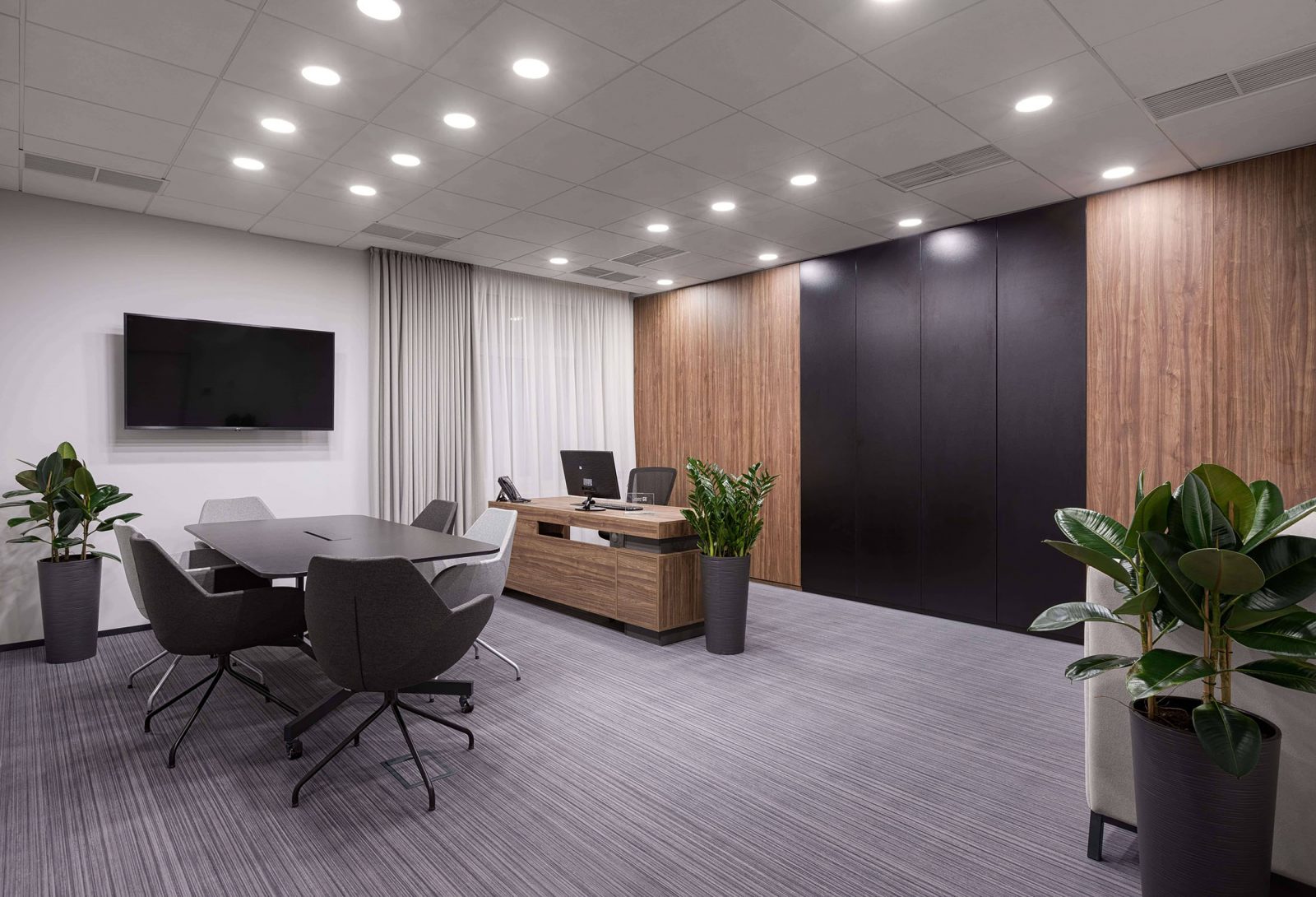
- Focal (local, point). When we talk about local or spot lighting, we mean light that is focused on an individual or small space.
Advantage: Provides the right amount of light for each job, depending on the type of activity Disadvantages: A fixed installation is required in each zone and for each type of luminaire.
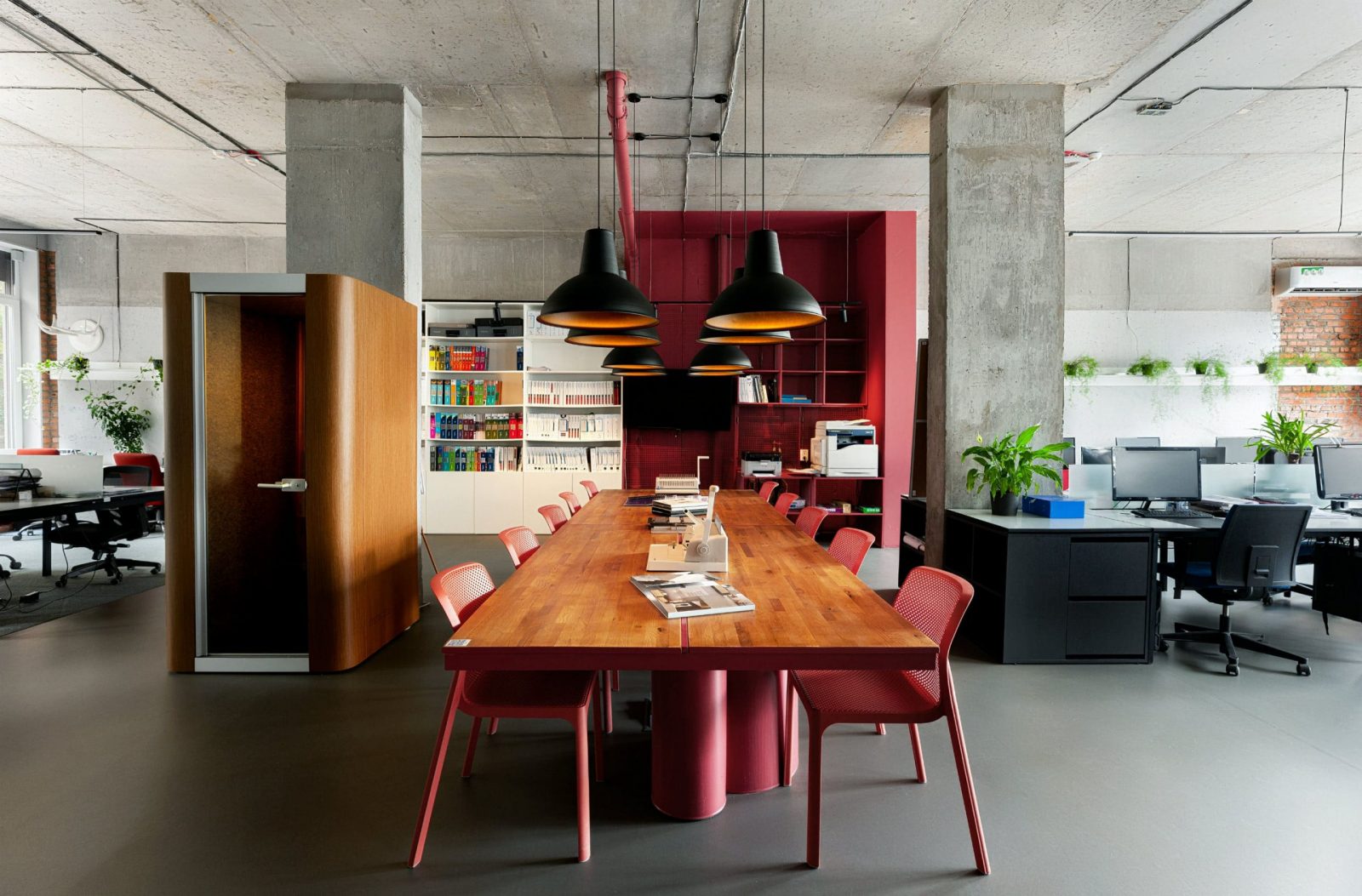
- Decorative (ambient). When designing office lighting, we must also take into account the aesthetic factor. Floor lamps, pendant lamps, linear luminaires, etc., all of these types of luminaires are ideal for decorating reception areas, waiting rooms or lounges as they provide warm and pleasant light.
Benefit: Provides warm and pleasant light, promoting relaxation and well-being in common areas Allows the placement of designer lamps and sculptural lamps, giving the space an elegant and sophisticated look. reflections that interfere with the normal development of work.
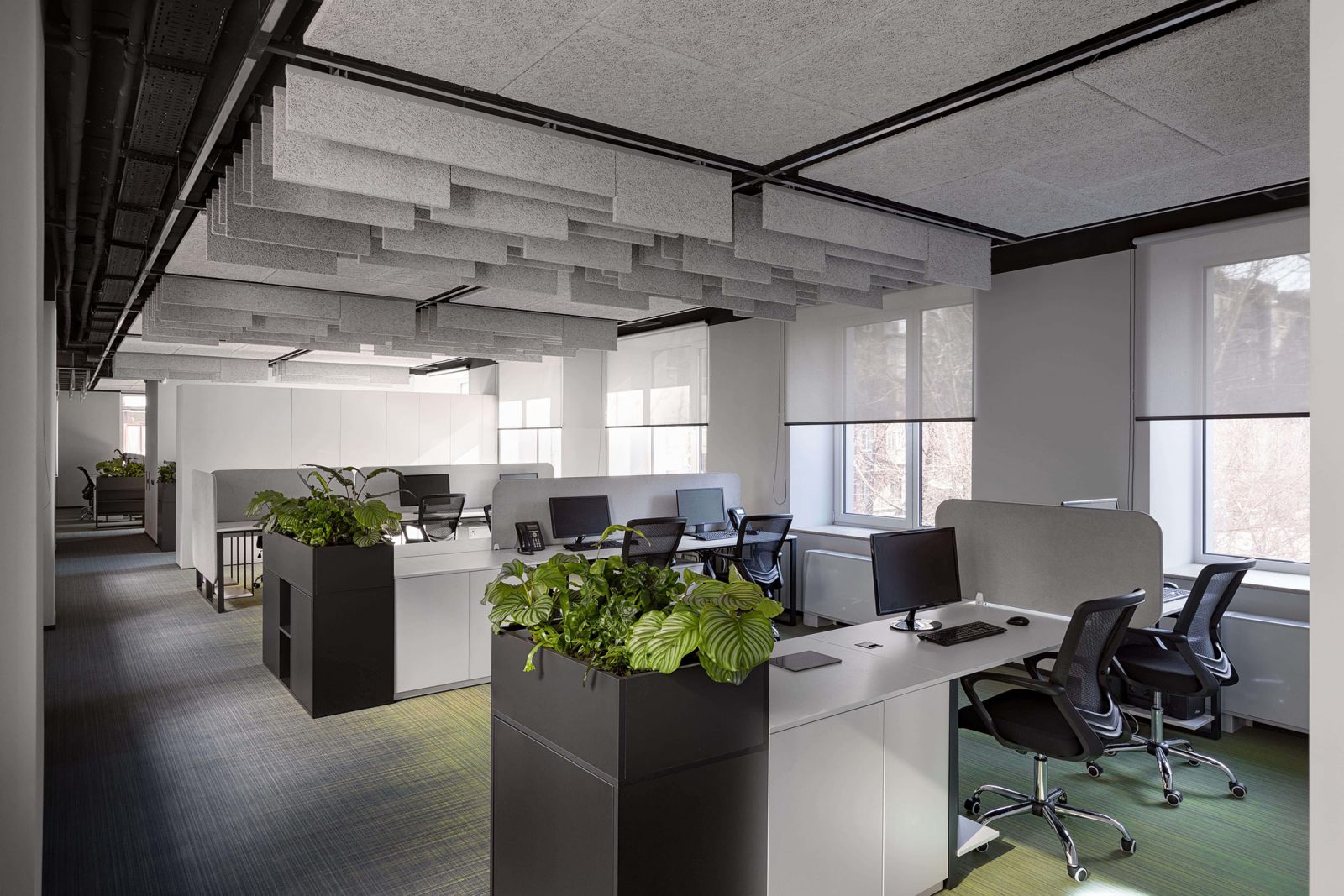
Below are some of the ways lighting can help create separation in an office:
Huge pendant lights suspended above a large desk can help define this space as a meeting and brainstorming space, even if it is part of an open-plan office. Spotlights can illuminate corridors, directing people to different parts of an office or building. Low lighting in booths or small secluded areas. nooks and crannies can convey a sense of privacy. Lounges and lounges are ideal places to set up more unusual lighting designs such as: different colors; accent lighting to highlight shelves or plants.
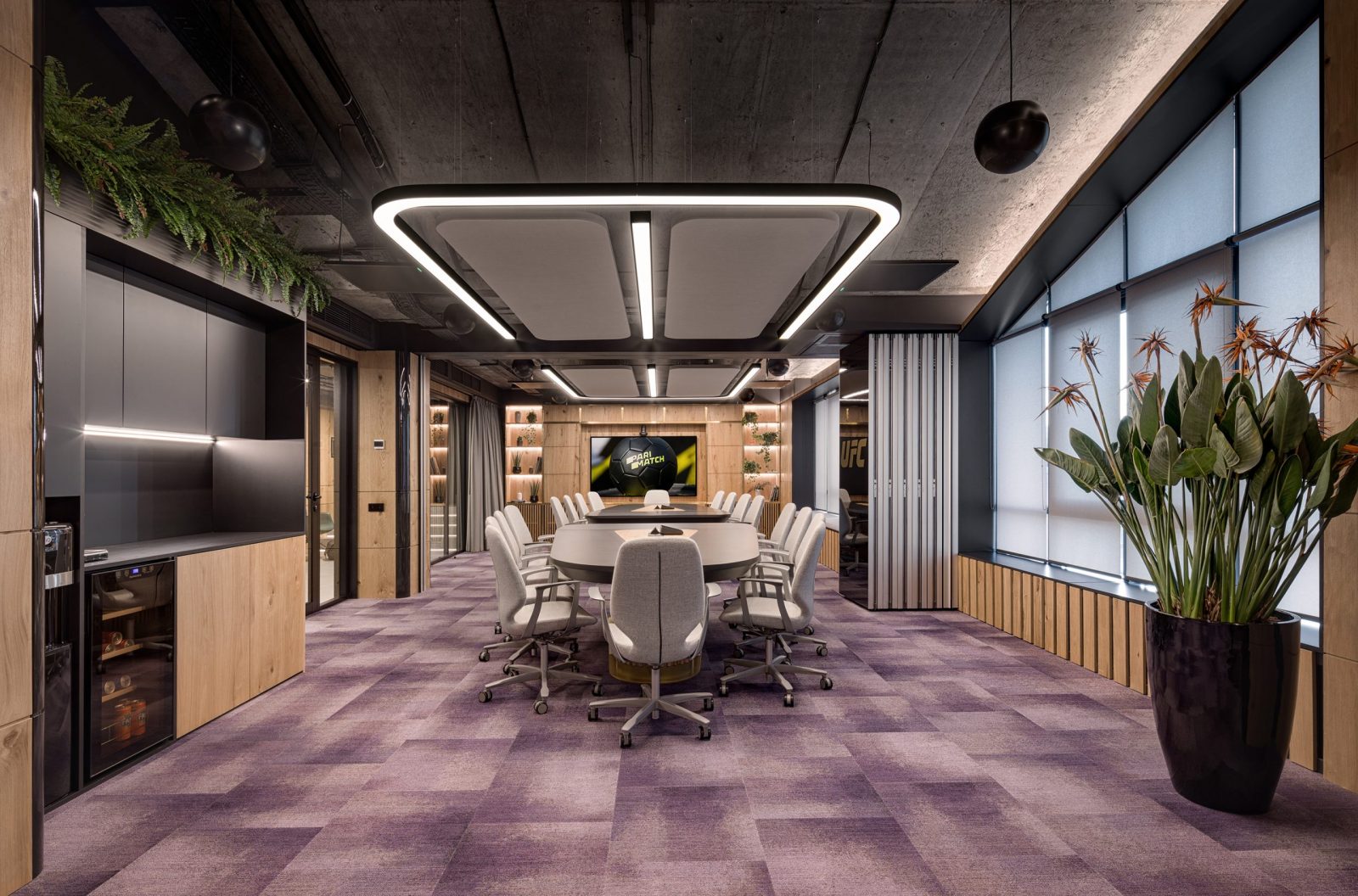
In all zones, you can add flexible features such as dimmer switches, floor lamps and table lamps to give people control over the light level and mood in the room, whether they want to work, eat, meet or relax in those places.
In conclusion, good lighting depends on a harmonious balance of ambient light and illumination of the workplace itself.